This system leverages the solubility of pollutants in organic waste gases within the spray liquid or their chemical reactivity with substances in the spray liquid to transfer organic pollutants from the gas phase to the liquid phase. For acidic or alkaline organic waste gases, alkaline or acidic spray liquids can be employed respectively for neutralization and absorption. For instance, sodium hydroxide solution can be used to absorb carboxylic acids from acidic organic waste gases.
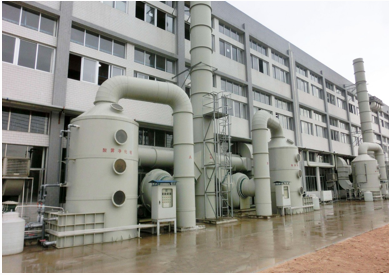
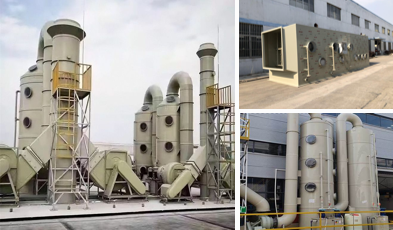
The spray tower is equipped with packing materials. As organic waste gases pass through the packing layer, the surface of the packing adsorbs some organic pollutants, thereby increasing the gas-liquid contact area and contact time, which enhances treatment efficiency. This system is effective in treating a variety of organic waste gases, achieving removal rates of up to 90% or more for pollutants that are highly water-soluble or readily react with the spray liquid.
Activated carbon adsorption equipment primarily utilizes the adsorptive properties of porous solid adsorbent activated carbon to effectively remove organic pollutants and odors from industrial waste gases. Activated carbon possesses a highly developed microporous structure and a vast specific surface area (typically ranging from 500 to 1500 m²/g), which allows it to adsorb VOC molecules into its pores via van der Waals forces without the need for chemical reactions.
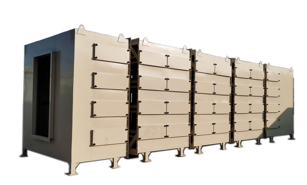
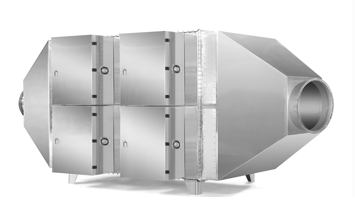
Once the adsorption capacity is saturated, VOCs can be released through methods such as high-temperature steam desorption or vacuum desorption, thereby regenerating the activated carbon. This process also concentrates the waste gas for subsequent treatment, such as catalytic combustion. Adsorption systems often employ multi-stage series or parallel configurations, integrated with online monitoring systems to ensure continuous operation and automatic switching.
 WeChat Support
 Zola Support
Copyright © 2025 CHOOICE LIMITED (深圳市覆源环境技术有限公司). All rights reserved. Mainland China ICP License No.: Yue ICP 2025421273 备案号: 粤ICP备2025421273号
Service Hotline