The total cooling capacity of the central air-conditioning system of a large complex in Shenzhen is 5,000 kW. The original system's operating COP was only 3.0, with high energy consumption costs and large differences in peak and valley electricity prices. In order to meet the requirements of the "Public Building Energy Saving Design Standard" (GB 50189-2015) and the "Green Building Evaluation Standard" (GB/T 50378-2019), our company carried out overall energy-saving transformation of its refrigeration units, terminal fans and pipe network systems, with the goal of annual electricity saving ≥15%.
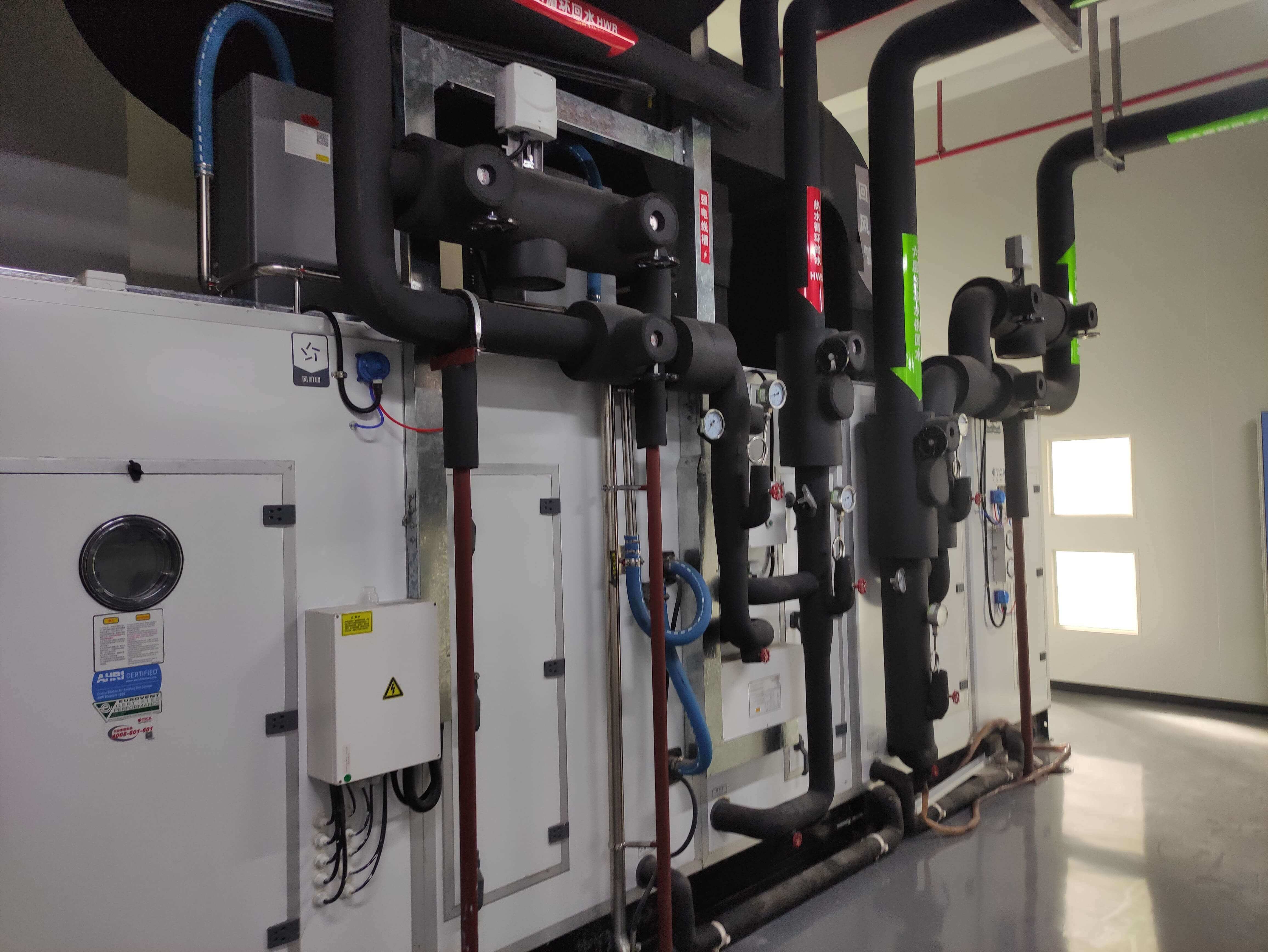
This project uses a combination of three major technologies: "variable frequency speed regulation + waste heat recovery + intelligent pipe network optimization": first, high-efficiency frequency converters are installed on the main chilled water pump, cooling water pump and fan to achieve accurate matching of air volume, flow and cooling load; second, the waste heat recovery device of the ceiling coil secondary circuit is used to recycle the waste heat of air conditioning exhaust for fresh air preheating and hot water supply, and the heat source replenishment in winter can save 10% of the heat demand; finally, the integrated BMS (building automation system) collects return water temperature, indoor load and electricity price signals in real time, and combines the peak and valley time-sharing strategy to intelligently switch between "night direct cooling" and "chilled water heat pump" modes, making the pipe network balance and terminal temperature control more refined.
After the renovation, the system's seasonal COP increased from 3.0 to 4.2, and the annual total electricity consumption decreased by approximately 1,200,000 kWh, with an electricity saving rate of 25%. In conjunction with the peak-valley time-of-use electricity strategy, the annual electricity bill expenditure was reduced by approximately RMB 1.5 million. The waste heat recovery renovation recovered an average of approximately 8,000 GJ of heat annually, and the hot water supply cost decreased by 15%. The project investment payback period was approximately 2.5 years, which significantly reduced energy consumption and operating costs while continuously providing owners with a stable, efficient, air-conditioned and comfortable environment.
 WeChat Support
 Zola Support
Copyright © 2025 CHOOICE LIMITED (深圳市覆源环境技术有限公司). All rights reserved. Mainland China ICP License No.: Yue ICP 2025421273 备案号: 粤ICP备2025421273号
Service Hotline